

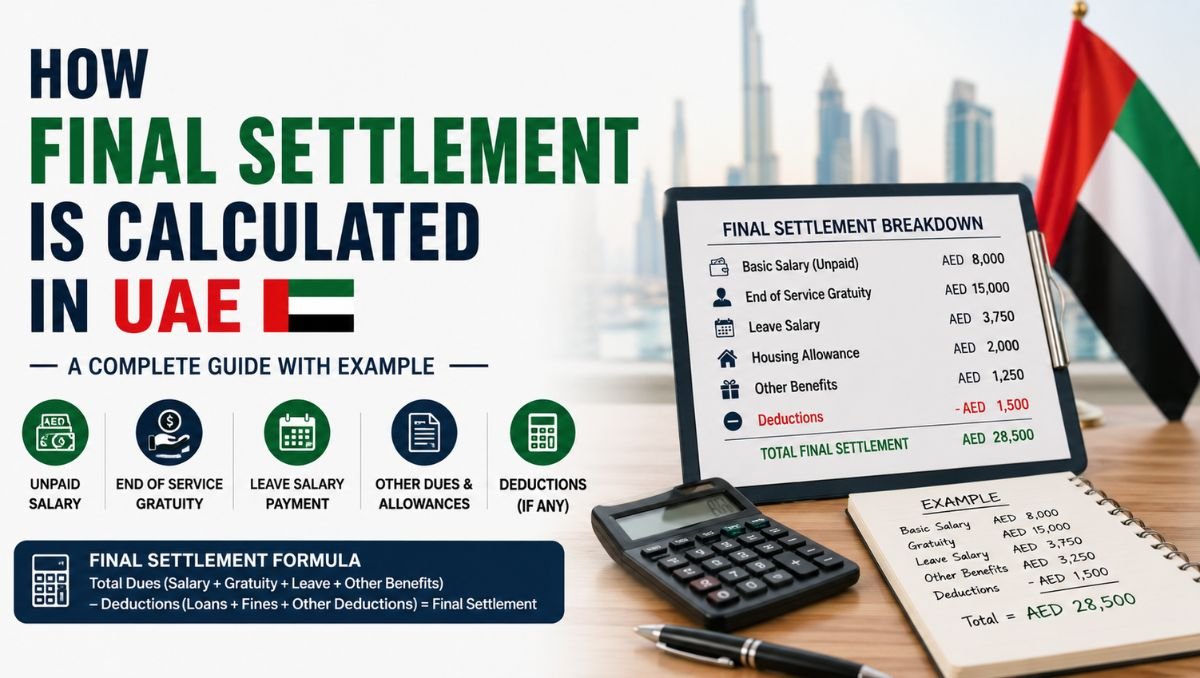
How Final Settlement is Calculated in UAE (2026 Guide with Example)
Public holidays in the UAE in 2026 are an essential subject matter for employees and employers alike because the public holidays will have an impact on their working arrangements and wages. How Final Settlement is Calculated in UAE The UAE is a multicultural country where both national and Islamic holidays are officially observed. If you work in the UAE or are planning to move there for employment, understanding public holiday rules is essential so you can fully know your legal rights and workplace benefits.
Visit Now: https://www.taxsal.com/
Full List of Public Holidays in UAE 2026 (How Final Settlement is Calculated in UAE)
The UAE public holidays for 2026 include New Year’s Day, Eid Al Fitr, Arafat Day, Eid Al Adha, Islamic New Year, Prophet Muhammad’s Birthday, and UAE National Day. New Year’s Day will be observed on January 1, 2026, marking the first official holiday of the year. Eid Al Fitr is expected to fall between March 19 and March 21, depending on moon sightings.
Arafat Day is expected on May 26, followed by Eid Al Adha from May 27 to May 29. Islamic New Year is expected around June 16, while Prophet Muhammad’s Birthday is likely to be observed on August 26. UAE National Day will be celebrated on December 2 and 3, which are among the country’s most important national holidays.
Are Public Holidays Paid in the UAE?
Under UAE Labour Law, official public holidays are generally paid days off for employees. This indicates that even if the worker is absent from work during the holiday period, the worker will still be paid his/her usual wages. The same practice is applicable to both public and private sectors, but there might be some exceptions in contract-based employment. Public holidays ensure that workers have time to relax, celebrate, and enjoy themselves without compromising their salaries.
Employee Pay Rules for Working on Public Holidays
There are some industries like the healthcare sector, retail sector, hospitality industry, transportation and logistics, security, and customer service that might need workers to work even on public holidays. According to labor laws in the UAE, the employer must compensate the worker for the work done during a public holiday. The compensation might be offered either as another paid holiday for the worker or additional pay for the work done beyond his/her usual salary. For example, an employee who works on a public holiday will get double his/her salary.
Read more: Public Holidays in UAE 2026: Full List & Employee Pay Rules Explained
Example of Holiday Pay Calculation
For instance, when an employee is paid AED 200 per day and asked to work during a national holiday, he/she may earn their basic salary of AED 200 plus an extra AED 100, which makes their total holiday pay AED 300. This is just an illustration of how holiday pay might be computed for employees.
What Happens If a Public Holiday Falls on a Weekend?
Public holidays sometimes coincide with the weekend days. However, in such situations, the authorities in the UAE may declare alternative dates for those holidays; but that does not necessarily happen. Employers as well as employees have to be sure from government sources and the MOHRE website about holiday dates.
Difference Between Private and Public Sector Holidays
A discrepancy might arise on the issue of holiday observance within the two sectors. Government officials may enjoy longer holidays or even be issued notifications regarding holidays compared to private organizations that must adhere to labor laws. The responsibility for observing the holidays lies with private organizations to ensure that their workers are given leave.
Read more: What is Net Salary in UAE? Complete Guide with Real Salary Examples (2026)
Employee Rights During UAE Public Holidays
Employees need to have knowledge about their legal rights concerning public holidays. Public holidays must be paid days, the employer cannot unfairly decrease salaries, and the employee working on public holidays must be compensated accordingly. Should there be any issues surrounding the violation of holiday rights by an employee, they can seek advice from labor offices.
Tips for Employers
It is essential for employers to have holiday plans well in advance so that there is no problem regarding manpower and payroll. Holiday plans must be well conveyed to the employees, attendance must be well recorded, and pay packages must be well known.
Read more: UAE Labour Law for Resignation (2026): Notice Period, Final Settlement & Rights
Conclusion
Public Holidays in UAE 2026 is a very useful planning tool for both the workers and employers. The workers will be able to know how much leave days and wages they deserve, and the employers will get more information about managing their staff and following labor laws. For those working in the UAE, knowing about public holidays is important.
FAQ’s
How Final Settlement is Calculated in UAE after resignation?
How Final Settlement is Calculated in UAE after resignation depends on unpaid salary, gratuity, unused leave salary, notice period, deductions, and any pending benefits.
How Final Settlement is Calculated in UAE for terminated employees?
How Final Settlement is Calculated in UAE for terminated employees usually includes earned salary, end-of-service gratuity, unused leave pay, and other approved dues.
How Final Settlement is Calculated in UAE with gratuity?
How Final Settlement is Calculated in UAE with gratuity depends on the employee’s basic salary, length of service, and contract terms under UAE Labour Law.
How Final Settlement is Calculated in UAE if leave salary is pending?
How Final Settlement is Calculated in UAE if leave salary is pending includes payment for unused annual leave along with salary and eligible end-of-service benefits.
How Final Settlement is Calculated in UAE before the last working day?
How Final Settlement is Calculated in UAE before the last working day is estimated by adding due salary, gratuity, leave balance, and approved allowances, then subtracting deductions.